Walk into a cha chaan teng (茶餐廳) in Hong Kong — or in San Francisco's Sunset District — and you'll immediately notice the energy. Tables close together. Orders called out fast. A menu longer than your arm. The unmistakable smell of toast and strong black tea. And a crowd that includes everyone from retirees on their morning tea to students cramming before class.
A cha chaan teng is Hong Kong's answer to the neighborhood diner. Open long hours, affordable prices, chaotic in the best way. It's not fine dining, and it was never meant to be. It's the place where Hong Kong people eat when they want something real.
Where Did Cha Chaan Teng Come From?
The cha chaan teng emerged in Hong Kong in the 1940s and 1950s as a local alternative to the Western-style cafes that were popular but expensive at the time. The name translates literally to "tea restaurant" (茶 = tea, 餐 = meal, 廳 = hall) — but the concept is much broader than tea.
Hong Kong had been a British colony, and Western food culture was everywhere — toast, coffee, sandwiches, condensed milk. Local entrepreneurs took these ingredients and remixed them through a Cantonese lens, creating something entirely new. Pineapple buns that aren't made with pineapple. French toast deep-fried and soaked in condensed milk. Macaroni in broth instead of tomato sauce.
This creative fusion became the DNA of the cha chaan teng — and it spread throughout Hong Kong, becoming a cornerstone of daily life. Today, UNESCO recognizes Hong Kong's cha chaan teng culture as an important piece of intangible cultural heritage.
The Menu — What Do People Actually Order?
The cha chaan teng menu is famously long and a little bewildering the first time you see it. Here are the staples you need to know:
Drinks
- Hong Kong milk tea (nai cha, 奶茶) — The signature drink. Blended black teas brewed strong, strained through a cloth filter, and mixed with evaporated milk. Available hot or iced. Full guide here.
- Yuenyeung (鴛鴦) — A 50/50 mix of Hong Kong milk tea and coffee. Sounds unusual, tastes like a revelation.
- Lemon tea (ling mung cha) — Strong black tea over ice with fresh lemon slices. Tart and refreshing.
- Hot Horlicks or Ovaltine — Popular breakfast drinks, served rich and thick.
Toast and Bread
- Butter and jam toast — The default pairing with morning tea. Simple, honest, perfect.
- Peanut butter and condensed milk toast — A thick layer of peanut butter, a drizzle of sweetened condensed milk. Sounds indulgent because it is.
- French toast (si doh, 西多士) — Thick-cut bread soaked in egg, deep-fried until golden, then doused with butter and condensed milk. Not a diet food. Worth every bite.
- Pineapple bun (boh loh baau, 菠蘿包) — A soft bun with a crunchy, sugared top crust (the "pineapple" refers to the pattern, not the flavor). A classic with a slab of cold butter tucked inside.
Rice Dishes
- Baked rice (guk faan, 焗飯) — Rice topped with meat, sauce, and a generous layer of cheese, then oven-baked until golden and bubbling. One of the most requested dishes at a proper cha chaan teng.
- Curry fish ball rice — Soft fish balls in a fragrant curry sauce, served over steamed rice.
- Chicken chop over rice — A thin-pounded chicken breast, pan-fried crispy, served over white rice with a simple brown sauce.
Teppan (Hot Plate) Dishes
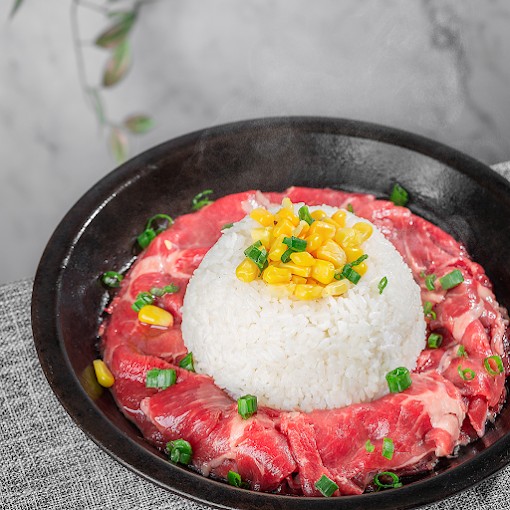
- Teppan beef — Sliced beef served sizzling on a cast-iron hot plate with onions and a savory sauce. The visual spectacle alone makes it worth ordering.
- Teppan pork chop — Same concept, different protein. Crispy exterior, tender interior, arrives at the table still crackling.
Noodles and Soup
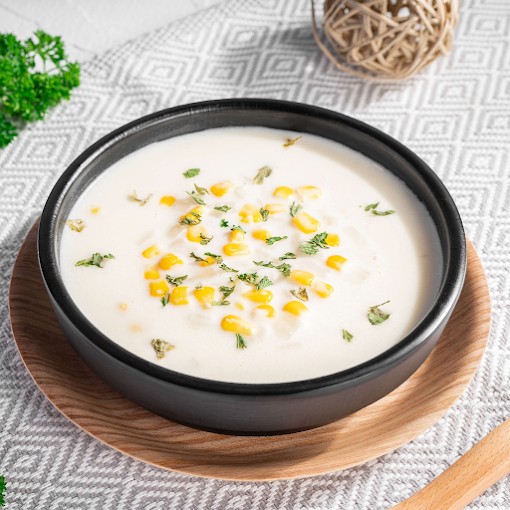
- Macaroni soup (tong macaroni) — Elbow macaroni in a clear chicken broth with luncheon meat and sometimes a fried egg on top. A beloved Hong Kong breakfast that surprises first-timers.
- Wonton noodle soup — Delicate shrimp-pork wontons in a clear broth with thin egg noodles. The broth is everything.
- Instant noodles upgraded — Many cha chaan tengs serve instant noodles with add-ins like luncheon meat, egg, or fish balls. Humble, satisfying, and completely intentional.
Egg Tarts
Egg tarts (daan taat, 蛋撻) are the essential dessert — a flaky or shortcrust pastry shell filled with smooth, just-set egg custard. They should wobble slightly when you pick them up. Best eaten warm, as soon as they come out of the oven.
The Set Meal Culture
In a cha chaan teng, most people order from the to chaan (套餐) — the set meal. A typical set includes a main dish (rice, noodles, or toast), a drink, and sometimes a soup. Everything arrives at once, and the drink is non-negotiable. You pick the tea, coffee, or yuenyeung when you order.
This is important: ordering à la carte is an option, but the set is almost always better value. At Smile House Cafe, the set meals are listed clearly with the drink options included.
How to Order (Without Panicking)
First-timers sometimes feel intimidated by the pace of a cha chaan teng. Here's how it actually works:
- Sit down and flag someone over — There's rarely a formal "wait to be seated" protocol. Find an open table, sit, and make eye contact with the nearest staff member.
- Scan the menu fast — The menus at most cha chaan tengs are laminated, picture-heavy, and designed to be read quickly. Pick a set meal number and a drink.
- Know your drink temperature — Hot (yit) or iced (dong). They'll ask. Have an answer ready.
- Don't linger too long — The pace is fast by design. Eat, drink, leave. The turnover is what keeps prices low.
That said, Smile House Cafe in SF is a friendlier pace than a packed Hong Kong lunchtime rush. You'll have time to read the menu properly.
What Makes a Cha Chaan Teng Different from a Dim Sum Restaurant?
Both are Cantonese. Both serve tea. But they're very different experiences:
| Cha Chaan Teng | Dim Sum Restaurant | |
|---|---|---|
| Meal type | Any time — breakfast, lunch, dinner | Brunch/lunch focused (yum cha) |
| Order style | Individual plates from a full menu | Shared small dishes, often from carts |
| Price | Very affordable, individual portions | Moderate, better for groups |
| Atmosphere | Fast, casual, functional | Louder, communal, celebratory |
| Best for | Solo or small groups, any time | Families, weekend mornings |
Cha Chaan Teng in San Francisco — Smile House Cafe
San Francisco's Outer Sunset neighborhood has one of the highest concentrations of Cantonese speakers outside of Hong Kong and Guangdong. That community has sustained authentic Hong Kong food culture here for decades.
Smile House Cafe at 1030 Taraval St is a proper cha chaan teng in the traditional sense — baked rice, teppan dishes, Hong Kong milk tea, yuenyeung, and egg tarts. The kitchen doesn't cut corners on the milk tea or the baked rice, and the set meals are genuinely good value.
1030 Taraval St · San Francisco · Open Wed–Sun, lunch & dinner
Order Online →Frequently Asked Questions
Is a cha chaan teng the same as a dim sum restaurant?
No. Dim sum (yum cha) is a specific style of brunch where shared small dishes are ordered from carts or a separate menu. A cha chaan teng serves individual meals at any hour — breakfast through dinner — from a full menu of rice, noodles, toast, and drinks.
Is cha chaan teng food expensive?
No — it's one of the more affordable dining options. In Hong Kong, a full set meal with a drink typically costs the equivalent of $5–10 USD. In San Francisco, expect $12–18 for a set, which is still very reasonable for a full meal with a drink.
What's the best thing to order at a cha chaan teng for the first time?
Get the baked rice set with a Hong Kong milk tea. The baked rice is a crowd-pleaser that shows off what the kitchen can do, and the milk tea is the essential drink. If you want to go further, add an egg tart to finish.
Are cha chaan tengs vegetarian-friendly?
Partially. Most menus are meat-forward, but there are vegetable dishes, egg-based items, and tofu options. The milk tea and yuenyeung are naturally vegetarian (using evaporated milk). It's worth asking about specific dishes if you have dietary restrictions.
Why is it sometimes spelled "cha chaan ting"?
Cantonese romanization isn't standardized. "Teng" and "ting" are both used for the same character (廳). You'll see both spellings — they refer to the same thing.